|
QoA Streaming Mass

To view a collection of all recent masses, please click
on the following link: Click Here
The Liturgical Changes of Pope Pius
XII
Modernists, in their attempt to destroy
the Catholic liturgy, gradually and cunningly introduced
the New “Mass” or Novus Ordo Missae, the new sacraments,
and the liturgical changes resulting from Vatican II. As
a result, traditional Catholics are wary of liturgical
change. Some traditionalists have rejected the legitimate
changes introduced by Pope Pius XII, whom they yet
consider to be a true pope.
They erroneously claim that some of these changes,
including the Restored Order of Holy Week, were the first
steps toward the Novus Ordo due to the reputed involvement
of Monsignor Annibale Bugnini and the tinkering of
Modernists. They do not reject all the changes of Pope
Pius XII; they pick and choose what they will accept and
reject. For example, they observe the pope’s revision of
the Holy Communion fast and permission for evening
Masses. Who gives them the authority to determine which
liturgical rites, decrees, and rubrics to follow or
reject?
Pope Pius XII enacted several liturgical changes, among
which are the following:
1) For many centuries, the Catholic Church required
persons to fast from midnight from all food and liquids,
including water, before the reception of Holy Communion.
In the 1950’s, Pope Pius XII changed the fasting laws to
one hour from non-alcoholic drinks and three hours from
food and alcoholic drinks. Water and medicine can be
taken at any time before receiving the Holy Eucharist. As
a result of this radical change, Catholics are able to
receive Our Lord in Holy Communion more frequently.
American priests who often offered multiple or later
Masses on Sundays appreciated the change.
2
2) His Holiness allowed the celebration of afternoon
and evening Masses—a major change from previous
observances.
3) In 1955, he simplified the rubrics of the breviary
and missal by changing the rankings of some feastdays and
eliminating some octaves and vigils. He implemented into
the Roman Breviary the reforms made to the Monastic
Breviary by Pope St. Pius X.
4) In 1955, Pope Pius XII approved a new Holy Week
Missal that restored some of the ceremonies that had been
altered over the years. He also made it easier for
working people to attend the liturgy on Holy Thursday,
Good Friday, and the Easter Vigil by restoring the
ceremonies to their original and appropriate time. In
apostolic times the Catholic Church celebrated the liturgy
of Holy Thursday, Good Friday, and the Easter Vigil at the
same hours of the day that the sacred mysteries occurred.
Thus the institution of the Holy Eucharist was recalled on
Holy Thursday evening, the Passion and Crucifixion were
recalled on Good Friday in the hours after noon and the
Easter Vigil occurred on Holy Saturday night, ending on
Easter morning with the joy of Our Lord’s resurrection.
3
“During the middle ages… [the Church] began, for various
pertinent reasons, to set an earlier time for the
performance of liturgical services on those days, so that
toward the end of that period all of these liturgical
services had been transferred to the morning. This did
not take place without detriment to the liturgical
meaning, nor without causing some confusion between the
Gospel narratives and the liturgical ceremonies attached
to them. The solemn liturgy of the Easter vigil in
particular lost its original clarity and the meaning of
its words and symbols when it was torn from its proper
nocturnal setting. Moreover, Holy Saturday, with too
early a recollection of the Easter gladness intruding into
it, lost its original character as a day of mourning for
the burial of the Lord.” (Decree of the Sacred
Congregation of Rites, pp. 1-2, November 16, 1955.)
The solemn liturgical services of Holy Thursday, Good
Friday, and the Easter Vigil were held in the morning in
nearly empty churches because few could attend.
Schoolboys replaced men for the liturgical footwashing
ceremony on Holy Thursday because laymen were compelled to
work. Due to Pope Pius XII’s restoration of Holy Week,
the faithful come in large numbers to assist at the sacred
liturgy and receive Holy Communion.
In 1951 Pope Pius XII restored the Easter Vigil to the
late evening, its proper time. “For centuries the Church
has known the incongruity of celebrating the Easter
Vigil—a service whose texts [e.g., the alleluias] and
symbolism [e.g., the Lumen Christi] obviously call for the
night hours—at a very early hour in the morning of Holy
Saturday when Christ certainly had not yet arisen. That
this was not always so is proved beyond doubt by
historical documents.” (John Miller, C.S.C., The History
and Spirit of Holy Week, The American Ecclesiastical
Review, p. 235.)
Pope Pius XII reduced the number of lessons recited from
twelve to four, reverting to the practice of St. Gregory
the Great. The pope ordained that the Lenten fast
conclude at midnight on Holy Saturday instead of noon in
order to complete a forty-day fast, rather than a
thirty-nine days’ fast. This disciplinary law ensures
that Holy Saturday retains its mournful character at the
death of our Redeemer who lay in the Holy Sepulcher.
5) In 1954, Pope Pius XII revised the Divine Office,
omitting several prayers, such as the Our Father, Hail
Mary, and Creed before the hours, the preces at Lauds and
Vespers with some exceptions, the lengthy Athanasian
Creed, except for Trinity Sunday, etc. According to the
Sacred Congregation of Rites, the main purpose of these
modifications was “to reduce the great complexity of the
rubrics to simpler form.”
Pope St. Pius X had already introduced some of these
changes into the Monastic Breviary. Through the influence
of the Benedictines, Pope Pius XII extended them to all
the clergy. By simplifying the rubrics and shortening the
prayers, it became easier for priests to faithfully and
devoutly fulfill their obligation of daily recitation of
the Divine Office instead of merely going through the
motions in a rushed way. The clergy welcomed these wise
changes.
Pope Pius XII officially approved and promulgated these
changes. Bugnini had no authority to promulgate
anything. For anyone to refer to the Restored Ordo of
Holy Week as Bugnini’s liturgy is disingenuous and
intellectually dishonest. Whatever part he may have had
does not obscure the fact that numerous orthodox cardinals
and liturgists were involved in preparing these changes.
[When the Cardinals gathered at the Vatican in the
1950’s] “they considered the affair thoroughly and voted
unanimously that the restored Ordo of Holy Week be
approved and prescribed, subject to the approval of the
Holy Father. After all this had been reported in detail
to the Holy Father by the… Cardinal Prefect, His Holiness
deigned to approve what the Cardinals had decided. Hence,
by special mandate of the same Pope Pius XII, the Sacred
Congregation of Rites has decreed the following… [giving
specific directions, including:] Those who follow the
Roman rite are bound… to follow the Restored Ordo for Holy
Week, set forth in the official Vatican edition.”
According to Pope Pius XII, the liturgical reforms he
enacted were “a sign of the providential dispositions of
God for the present time of the movement of the Holy
Spirit in the Church.” (The Assisi Papers. Proceedings
of the First International Congress of Pastoral Liturgy,
Assisi-Rome, September 18-22, 1956, p. 224.) Christ said
to St. Peter and His lawful successors, “He who hears you,
hears Me.” The matter at stake is obedience to the
supreme legitimate authority of the Catholic Church. A
true pope approved these changes. We must accept these
changes as lawful and binding unless we can prove that
Pope Pius XII was not a true pope.
The changes introduced by Pope Pius XII are lawful, holy
and conducive to the sanctification and salvation of
souls. The Catholic Church has consistently taught that a
valid pope cannot promulgate a liturgical ceremony or law
that is harmful to faith and piety or displeasing to God.
In such decisions the pope is protected by infallibility.
Pope Pius VI stigmatized as “at least erroneous” the
hypothesis “that the Church could establish discipline
which would be dangerous, harmful, conducive to
superstition and materialism.” (D. 1578.) In Session 22,
canon 7, the Council of Trent condemns anyone who says
that the ceremonies of the Church are a stimulus to
impiety rather than to piety.
Theologians teach that universal disciplinary laws and
liturgical changes are secondary objects of
infallibility. This is clearly explained by Monsignor Van
Noort: “The well-known axiom, Lex orandi est lex credenda
(The law of prayer is the law of belief), is a special
application of the doctrine of the Church’s infallibility
in disciplinary matters. This axiom says in effect that
formulae of prayer approved for public use in the
universal Church cannot contain errors against faith and
morals.” (Christ’s Church, p. 116.)
The liturgical changes of Pope Pius XII: the institution
of the feastday of St. Joseph the Workman, the restoration
of Holy Week, the fasting laws before Holy Communion, etc.
are not sinful. If anyone should say that they are
heretical or sinful, he would be accusing the infallible
teaching authority of the Church of sacrilegious practices
and doctrinal errors that corrupt the faith, compromise
its doctrines and harm souls. Consequently, they deny
that Christ protects His Church and its sacred liturgy
from evil and error.
Pope Pius XII promulgated the Restored Holy Week liturgy
and forbade, in most precise language, priests from using
the previous liturgy any longer. He also condemned
antiquarianism, the return to earlier liturgical practices
not in conformity with current rubrics and ecclesiastical
laws, for it implies that the Holy Ghost is not actively
guiding the Church. Older is not always better,
especially when in defiance to the orders of a true pope.
Our motive for following the liturgical changes of Pope
Pius XII is the infallible teaching authority of the
Church. They were authorized by an infallible Vicar of
Christ and were officially promulgated to replace
previously existing rites and laws. Since Pope Pius XII
was a true pope, we must obey his commands regarding the
sacred liturgy. It is the safe, consistent and orthodox
course.
7
On the other hand, one who accepts Pius XII as a true
pope, but refuses to accept his liturgical decrees
demonstrates defiance, and disobedience. It is a form of
“recognize and resist.” By picking and choosing what they
will accept, they set themselves up as the supreme
authority of the Catholic Church. They claim the right to
judge the pope, sift what he teaches and decide what they
will obey and what they will reject. It is wrong to pick
and choose what to obey and what to discard. It seems
that there is danger to the faith in rejecting the
liturgical changes of Pope Pius XII.
Gallicanism is a heresy adverse to papal jurisdiction,
tending to limit the power of the pope. It began in the
early 15th century and spread throughout Europe. Sadly,
as a result, many Europeans lost their sense of obedience
to the pope. In 1682 the French clergy formulated the
Four Articles that became obligatory for all schools and
teachers of theology. The fourth article stated that papal
judgment lacks value without the consent of the Church.
Pope Alexander VIII, Pope Pius VI and the Vatican Council
condemned Gallicanism. The spirit of Gallicanism is
prevalent today.
Those who reject the liturgical changes of Pope Pius XII
are inconsistent. If they accept Pius XII as pope, they
must reserve their opinions about his liturgy, put aside
their liturgical likes and dislikes and simply obey him.
The Catholic mentality is obedience to lawful superiors in
all matters except sin.
The spirit of obedience to legitimate authority was
expressed by the mother of Lucia, one of the Fatima
children. When Lucia’s mother was asked why the new
pastor did not allow dancing and the old one did, she
answered: “I don’t know why the old one allowed it and now
the new one doesn’t. If the new pastor does not want
dancing, my children will not dance.”
8
Consider the following teachings of the Vatican Council
(1870): “We declare that the judgment of the Apostolic
See, whose authority is unsurpassed, is not subject to
review by anyone; nor is anyone allowed to pass judgment
on its decision.” (Denzinger 1830.)
“The first condition of salvation is to keep the norm of
the true faith. For it is impossible that the words of
Our Lord Jesus Christ Who said, ‘Thou art Peter and upon
this rock I will build My Church’ (Matt. 16: 18) should
not be verified. And their truth has been proved by
course of history, for in the Apostolic See the Catholic
religion has always been kept unsullied, and its teachings
kept holy… Indeed, it was this apostolic doctrine that
all the Fathers held, and the holy orthodox Doctors
reverenced and followed. For they fully realized that
this See of St. Peter always remains untainted by any
error, according to the divine promise Our Lord and Savior
made to the prince of the disciples, ‘I have prayed for
thee, that thy faith may not fail; and do thou, when once
thou hast turned again, strengthen thy brethren’ (Luke
22: 32). (Denzinger 1833.)
Paul VI clearly proved that he was an imposter and a false
pope when he promulgated an invalid Mass (Novus Ordo
Missae) and invalid sacraments. This is because a true
pope cannot approve formulae of prayer approved for public
use in the universal Church that contains errors against
faith and morals. To claim otherwise would be tantamount
to the idea that Christ has failed, for He promised to be
with His Church all days, even to the consummation of the
world and that the gates of Hell would not prevail against
His Church. On the other hand, Pope Pius XII was a true
pope and was protected by papal infallibility when he
promulgated the Restored Holy Week Liturgy.
I will conclude with an address of Pope St. Pius X to the
priests of the Apostolic Union: “When one loves the pope
one does not stop to debate about what he advises or
demands, to ask how far the rigorous duty of obedience
extends and to mark the limit of this obligation. When
one loves the pope, one does not object that he has not
spoken clearly enough, as if he were obliged to repeat
into the ear of each individual his will, so often clearly
expressed, not only viva voce [by a living voice], but
also by letters and other public documents; one does not
call his orders into doubt on the pretext—easily advanced
by whoever does not wish to obey—that they emanate not
directly from him, but from his entourage; one does not
limit the field in which he can and should exercise his
will; one does not oppose to the authority of the pope
that of other persons, however learned, who differ in
opinion from the pope. Besides, however great their
knowledge, their holiness is wanting, for there can be no
holiness where there is disagreement with the pope.” (AAS
1912, p. 695) We must remember that all this is
contingent upon a legitimate and validly elected pope;
this doesn’t apply to a heretical or invalidly elected
pope—a false pope.
Ash Wednesday
Although ashes may seem insignificant to us, they have a
profound spiritual significance in the Bible. They
signify the foolishness of idol worship, man’s
insignificance, and the deepest humility. They are also a
symbol of mourning and repentance. The Old Testament
contains eight references of spreading ashes on the head.
“As an expression of sorrow or penance, ashes were placed
on the head and a garment of sackcloth was worn (Matt. 11:
21, Luke 10: 13.)” (John Steinmueller, STD, S Scr L and
Kathryn Sullivan, RSCJ, Ph D, Catholic Biblical
Encyclopedia, p. 52.) Hence arose the expression “to do
penance in sackcloth and ashes” (Isaias 58: 5, Daniel 9:
3, Matt. 11: 21.) Our Lord twice mentions the Eastern
practice of using ashes to express penance or mourning.
Blesses ashes are a sacramental of the Church that are
placed upon the forehead on Ash Wednesday in order to
remind the faithful of death and the need for contrition
and penance during Lent. For many centuries, the Catholic
Church imposed ashes on public penitents, those who given
great public scandal. On Ash Wednesday, they would gather
at the door of the church in penitential garb and were
sprinkled with ashes by the bishop. Afterwards, the seven
Penitential Psalms and the Litany of the Saints were
recited. Throughout Lent, these penitents performed
rigorous penances.
This public penance is no longer practiced, but the custom
of putting ashes on the head has been retained by the
Catholic Church. Since 1091, the date of the Council of
Beneventum, it became customary for all Catholics,
faithful and clergy, to received blessed ashes. As the
blessed ashes are placed on the forehead, the priest
recites the words God spoke to our First Parents, Adam and
Eve, “Remember man that thou art dust and unto dust thou
shalt return.”
How are the blessed ashes distributed? They are put on
the head, the most prominent part of our body, and sadly,
in so many cases, the seat of our pride and vanity. The
blessed ashes are placed upon our forehead in the form of
a cross to remind us that Jesus redeemed us by His Passion
and death. We must take up our cross and follow Him.
“The blessing of ashes begins with an antiphon and a verse
of a psalm imploring the mercy and grace of God. Then
come four prayers which express the meaning of the ashes:
1. To be a spiritual help for all who contritely confess
their sins.
2. To secure for those who receive the ashes, the pardon
of all their sins.
3. To fill everyone with the spirit of sorrow for sin.
4. To give us courage and strength to do penance bravely.”
“After the priest sprinkles the ashes with holy water and
incenses them, he puts some on his own head and on the
heads of those present. He says another prayer for
protection in the coming [spiritual] combat.” (Arthur
Tonne, OFM, Talks on the Sacramentals, p. 10.)
Sadly, so many people take extreme care of their bodies
and their possessions, but do little to care for their
immortal souls. After death, our bodies decompose and are
reduced to dust and bones. Dust, the insignificant
material that sometimes accumulates on our furniture, dust
the matter that remains after a fire—after death our
bodies will be reduced to dust. Therefore, our primary
focus in life must be to save our immortal soul.
In 2025 the Palisades and Eaton Fires [in Los Angeles
county] burned a combined 37,728 acres of land and 16,246
structures were destroyed.” (County of Los Angeles
Emergency Survival Guide, p. 63.) This left thousands of
people homeless, losing almost everything they owned.
Sadly, their belongings were reduced to ashes. The
ceremonies of Ash Wednesday remind us of the emptiness of
material things and the value of things eternal.
I’ll close with a story. “A certain French nobleman who
had led a wicked life was moved by grace to change his
ways. As he was too well known in France, he went to Rome
to make his confession to the Holy Father himself. Pope
Pius VI, who reigned from 1775 to 1799, received him
kindly, and heard his confession. But when it came to
imposing a penance, nothing seemed to suit the sinner’s
tastes or strength. He was too weak to fast. He was too
busy to read or pray much. He could not make a
pilgrimage. He was too tired to keep prayerful watch. No
penance seemed suitable.”
“Wise guide that he was, Pope Pius finally gave the
penitent a golden ring on which were engraved the words,
Momemto mori, which means, Remember you will die. His
penance was to wear this ring and read the words on it at
least once a day.”
“At first this was easy, but as he read those terrifying
and prophetic words day after day, the nobleman gradually
realized that death would one day come to him. He
reasoned: ‘If I have to die, what else can I do better on
this earth than prepare for death? Why pamper this body
which will one day rot in the ground?’ He began to carry
out not only one or two, but all of the penances which the
Holy Father suggested. He led a virtuous life and died a
happy death.”
“On Ash Wednesday of every year [Holy] Mother Church
gives to each one of us not a gold ring, but a few ashes.
The purpose of the ashes is the same as the purpose of the
ring which Pope Pius VI gave to his penitent, namely to
remind us of death. The ashes tell us what the ring told
the nobleman: Remember you will die.” (Tonne, 10.)

|
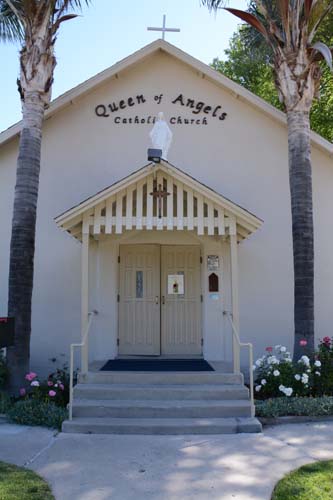
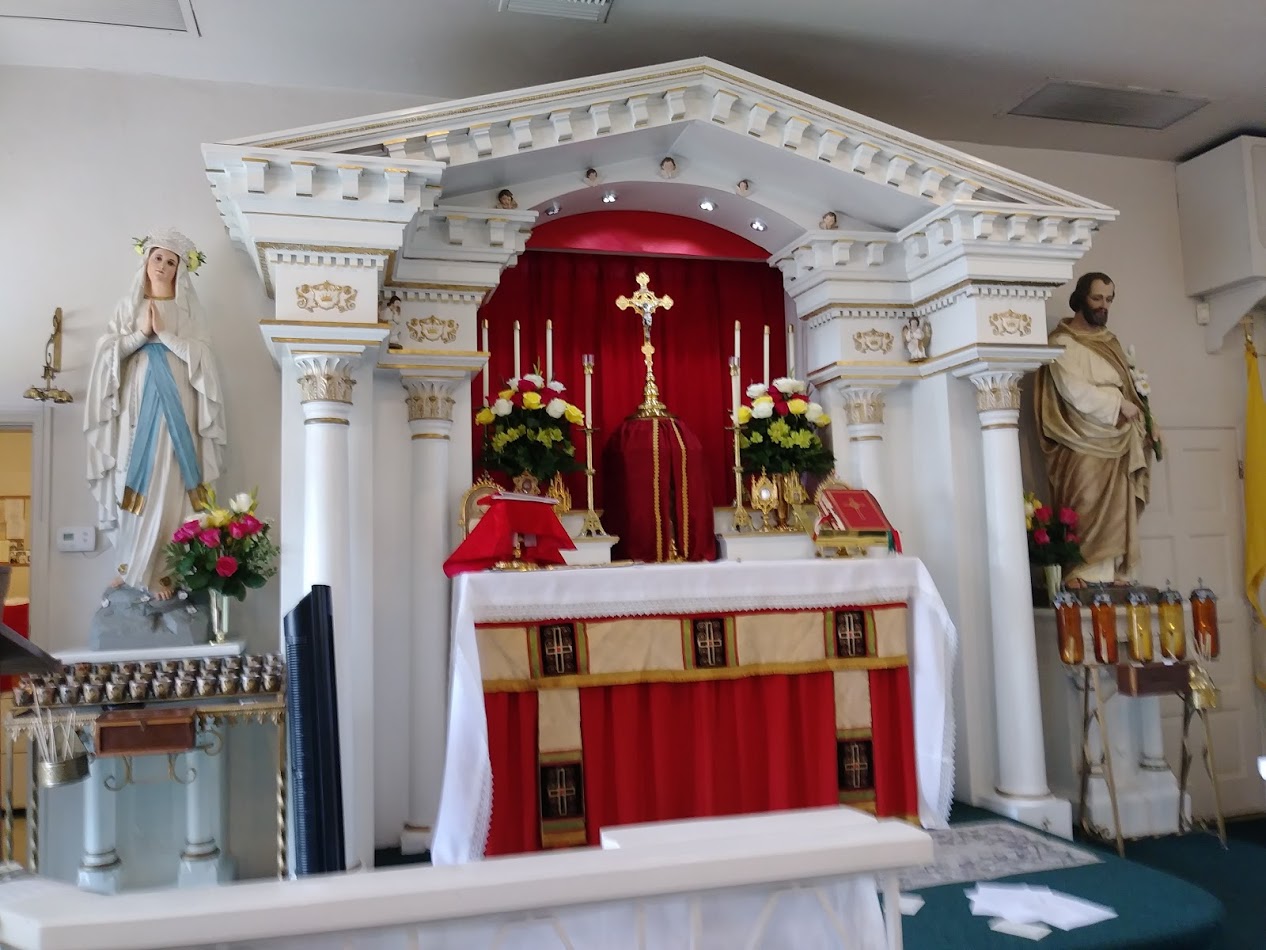
Queen of
Angels Catholic Church in Santa Clarita,
California, is much like any Catholic church you
might have attended before the Second Vatican
Council occurred in the 1960's. This Council,
supposedly intended to bring about a genuine
spiritual renewal in the living of our Faith,
inaugurated liturgical changes that broke
drastically from the Church's sacred liturgy and
traditions of nearly 2,000 years. It
is because of these changes and the resultant
universal loss of faith among so many bishops,
priests, nuns and laity, that Queen of Angels
and chapels like this one are drawing more and
more interest from concerned Catholics all over
the world.
The pastor of Queen of Angels is Father Dominic
Radecki, CMRI, a priest belonging to the religious
Congregation of Mary Immaculate Queen . The bishop
and priests of the Congregation of Mary Immaculate
Queen (CMRI) offer only the Tridentine Latin Mass
in all the churches and chapels they serve.
Remaining faithful to all of the Church's
venerable teachings and traditions, Queen
of Angels Church reflects the stability and
endurance of truths and doctrines that will
never change with the times.
The faithful receive Holy Communion on their
tongues as they kneel at the communion rail in
humble adoration of the Real Presence of God.
Ladies wear head coverings and modest clothing out
of respect. The reverent silence in the House of
God indicates a living faith in Christ Who dwells
in the tabernacle.
We have a full schedule of activities at our
church. The Sacraments are administered exactly
the way they were before Vatican II: Baptism,
Confirmation, Penance, the Holy Eucharist,
Matrimony and Extreme Unction. Parish
organizations who attend Queen of Angels, ranging
from basic catechism instruction for the youth and
converts to the Faith, to our Confraternity of
Christian Mothers. For those who wish to lead a
more dedicated spiritual life, we have the
Confraternity of Mary Immaculate Queen. We invite
you to check out all of our parish activities on
this website.
We at Queen of Angels welcome visitors to our
parish at anytime of the year, but especially at
Christmas and Easter. Although the number of
parishioners has outgrown our small church,
newcomers are always welcome.
Each of our parishioners adds something unique to
the family atmosphere we think is very special
here at our church. Come and see it for yourself!
If you have not been to a Latin Mass in many
years, if you have never been to one at all, you
will be pleasantly surprised at what you find at
Queen of Angels. You will feel as if you have come
home, as indeed you have.
Queen of Angels Catholic Church
Prayer to the August Queen of Heaven
August Queen of Heaven, Sovereign
Mistress of the Angels, who didst receive from the
beginning the mission and the power to crush the
serpent's head, we beseech thee to send thy holy
angels, that under thy command and by thy power
they may pursue the evil spirits, encounter them
on every side, resist their bold attacks, and
drive them hence into the abyss of woe.
Most holy Mother, send thy angels to defend us and
to drive the cruel enemy from us.
All ye holy Angels and Archangels, keep and defend
us. Amen
O good and tender Mother Thou shalt ever be our
love and our hope.
Holy Angels and Archangels, keep and defend us.
Amen

Novena of Confidence
to the Sacred Heart of Jesus
(for family relations that have fallen away)
O Lord Jesus Christ, to Thy Most
Sacred Heart I confide this intention (silently
mention here the names you are praying for). Only
look upon me, then do what Thy Heart inspires. Let
Thy Sacred Heart decide. I count on it. I trust in
it. I throw myself on its mercy, Lord Jesus! Thou
wilt not fail me.
Sacred Heart of Jesus, I trust in Thee.
Sacred Heart of Jesus, I believe in Thy love for
me.
Sacred Heart of Jesus, Thy
Kingdom come!
O Sacred Heart of Jesus, I have asked Thee for
many favors, but I earnestly implore this one.
Take it, place it in Thy open, broken Heart, and
when the Eternal Father looks upon it, covered
with Thy Precious Blood, He will not refuse it.s
It will no longer be my prayer but Thine, O Sacred
Heart of Jesus. O Sacred Heart of Jesus, I place
my trust in Thee. Let me never be confounded.
Amen.
|
 
The following true story explains this well.
The university professor challenged his students
with this question. “Did God create everything
that exists?”
A student bravely replied, “Yes, he did!” “God
created everything?” the professor asked. “Yes,”
the student replied. The professor answered, “If
God created everything, then God created evil
since evil exists, and according to the principle
that our works define who we are, then God is
evil.”
The student became quiet before such an answer.
The professor was quite pleased with himself and
boasted to the students that he had proven once
more that the Christian faith was a myth. At that
point, another student raised his hand and said,
“Can I ask you a question professor?” “Of
course,” replied the professor.
The student stood up and asked, “Professor does
cold exist?” “What kind of question is this? Of
course it exists. Have you never been cold?”
The students snickered at the young man’s
question. The young man replied, “In fact sir,
cold does not exist. According to the laws of
physics, what we consider cold is in reality the
absence of heat. Absolute zero (-460 degrees F)
is the total absence of heat; all matter becomes
inert and incapable of reaction at that
temperature. Cold does not exist. We have
created this word to describe “the absence of
heat.”
The student continued. “Professor, does darkness
exist?” The professor responded, “Of course it
does.”
The student replied, “Once again you are wrong
sir, darkness does not exist either. Darkness is
in reality the absence of light. You cannot
measure darkness. A simple ray of light can break
into a world of darkness and illuminate it. How
can you know how dark a certain space is? You
measure the amount of light present. Isn’t this
correct? Darkness is a term used by man to
describe what happens when there is no light
present.”
Finally the young man asked the professor. “Sir,
does evil exist?” Now uncertain, the professor
responded, “Of course! We see it every day.
It is in the daily example of man’s inhumanity to
man. It is in the multitude of crime and violence
everywhere in the world. These manifestations are
nothing else but evil.”
To this, the student replied, “Evil does not exist
sir, or at least it does not exist in itself.
Evil is simply the absence of God. It is just
like darkness and cold, a word that man has
created to describe the absence of God. God did
not create evil. Evil is not like faith, or love
that exist just as does light and heat. Evil is
the result of what happens when man does not have
God’s love present in his heart. It’s like the
cold that comes when there is no heat or the
darkness that comes when there is no light.” The
professor sat down.
The young man’s name – Albert Einstein.
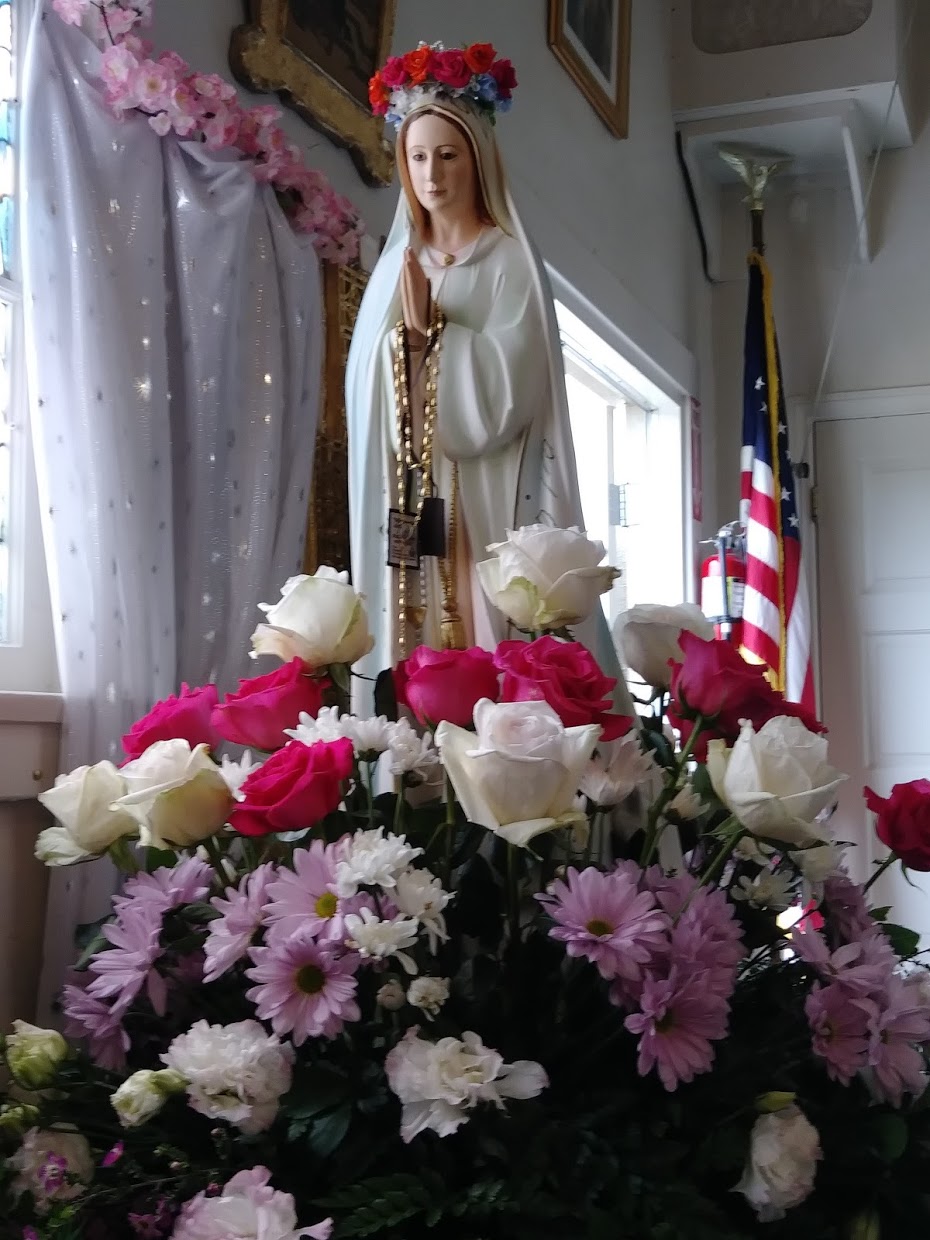
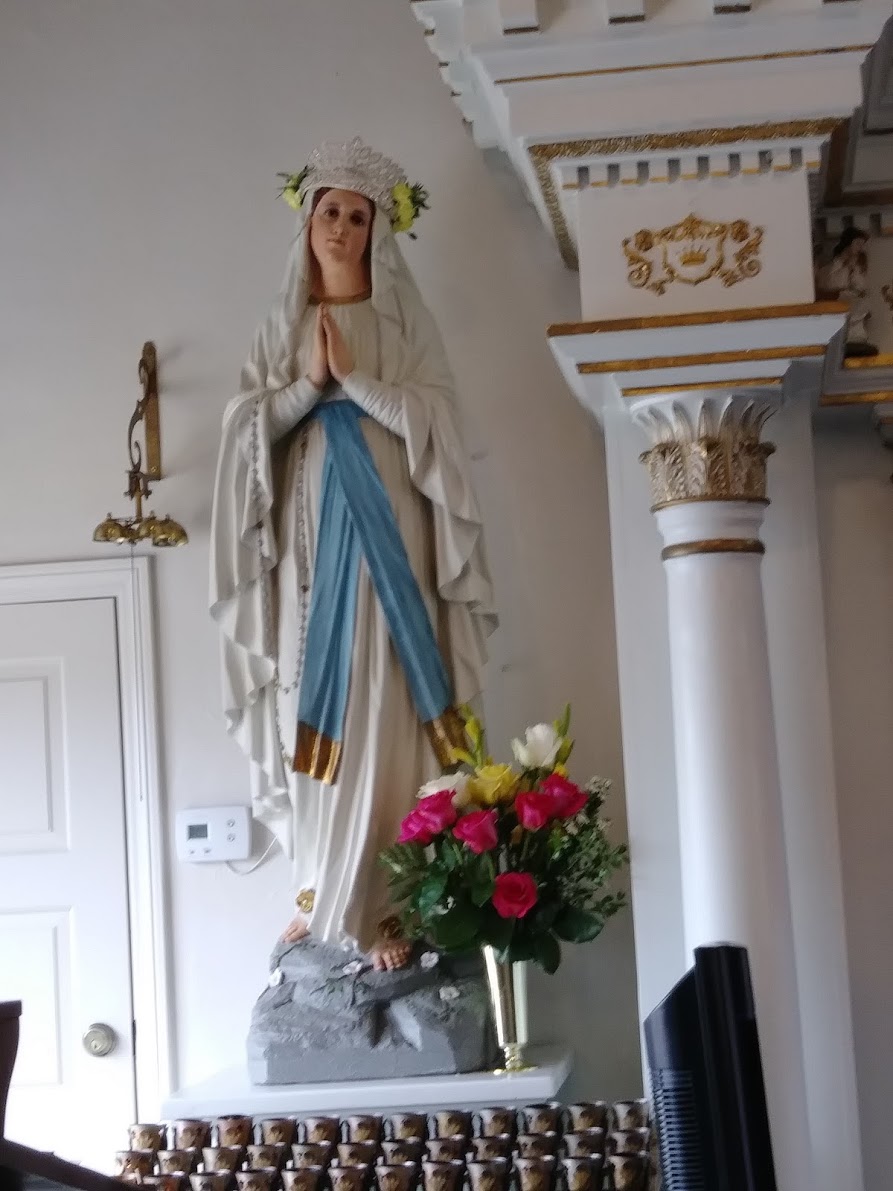
May Crowning

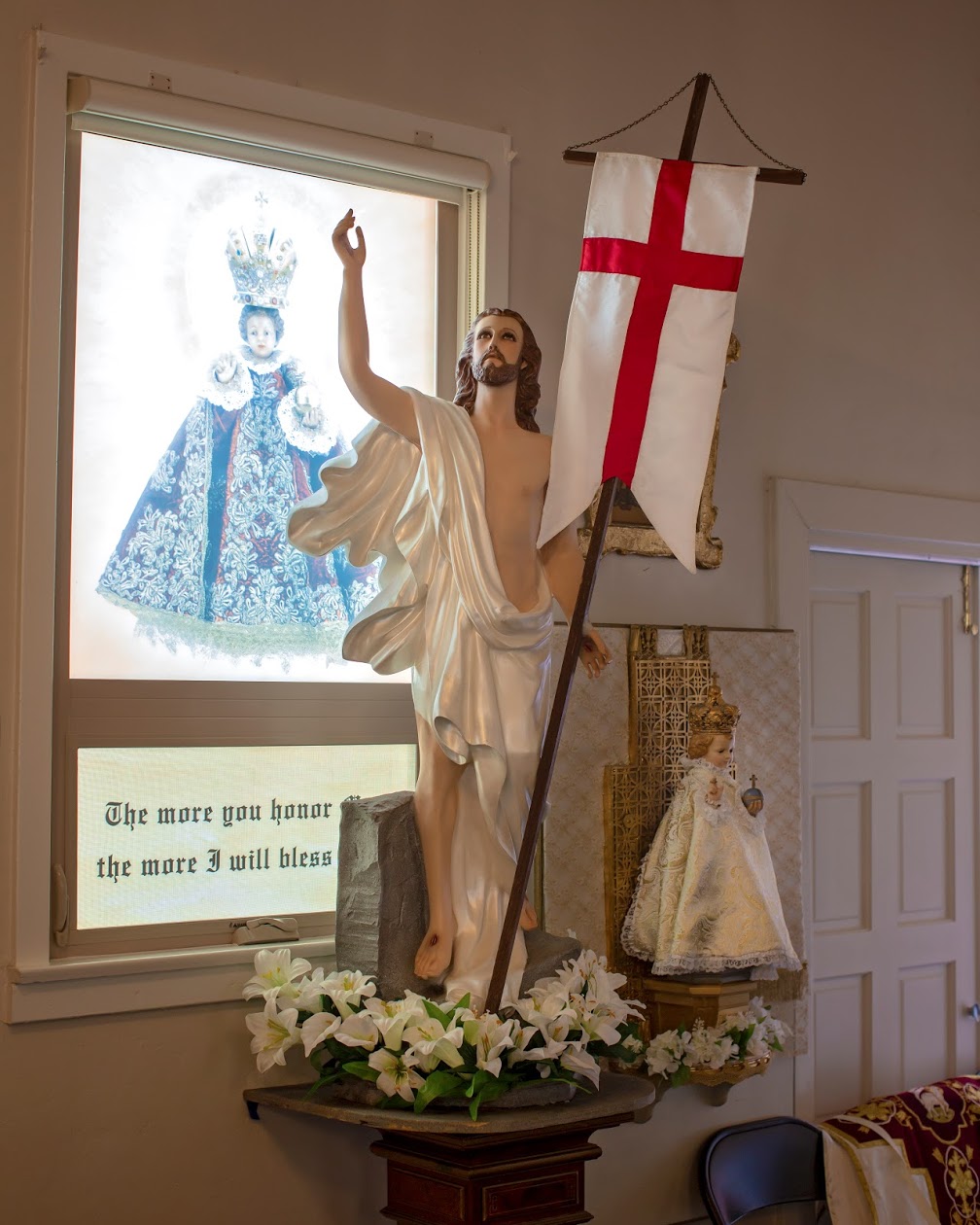
Queen of Angels Easter

Queen of Angels Altar

Queen of Angels May Procession

May Crowning
Prayer
The time may be delayed, the
manner may be unexpected, but the answer is sure
to come.
Not a tear of sacred sorrow, not a breath of holy
desire poured out to God will ever be lost, but in
God's own time and way will be wafted back again
in clouds of mercy and fall in showers of
blessings on you and on those for whom you pray.
|

Weekly Sermons
Latest Sermon: click_here
List of Previous Sermons:
click_here

General Information
Baptisms: One
parent and the sponsors must be practicing
Catholics who attend only the Traditional Latin
Mass. Call the pastor to make arrangements.
Confessions:
Sundays - one hour before Mass.
Weekdays - 10 minutes before Mass.
1st Friday and 1st Saturday -
during the Rosary.
Communion for the Sick:
Inform Father if you are unable to attend
Mass and wish to receive Holy Communion and/or
Extreme Unction.
Marriages
For registered members of Queen of Angels
parish only. Please contact the rectory at least
six months prior to the wedding date for marriage
instructions.
Mass Intentions:
If you would like to have Holy Mass
offered for your intention, please use the
envelopes provided in the back of the church. The
customary offering is $25.00. Mass requests are
honored in the order in which they are received.
If you wish a Mass offered on a particular day, it
must be submitted at least a month in advance.
Mass requests for special days will be honored
when possible.
First Holy Communion Classes:
Classes are held every Sunday at 12:30
PM.

Prayers For Rain
O God, in Whom we live, move and
have our being, grant us seasonable rain, so that
our temporal needs being sufficiently supplied, we
may seek with greater confidence after things
eternal.
Be appeased, we beseech Thee, O Lord, by the gifts
which we offer, and garnt us in season the
blessing of sufficient rain.
Grant us, we beseech Thee, O Lord, beneficial rain
and deign to pour out showers from Heaven upon the
parched face of the earth. Through Our Lord Jesus
Christ, Thy Son, Who liveth and reigneth with Thee
in the unity of the Holy Ghost. God, world without
end. Amen
|

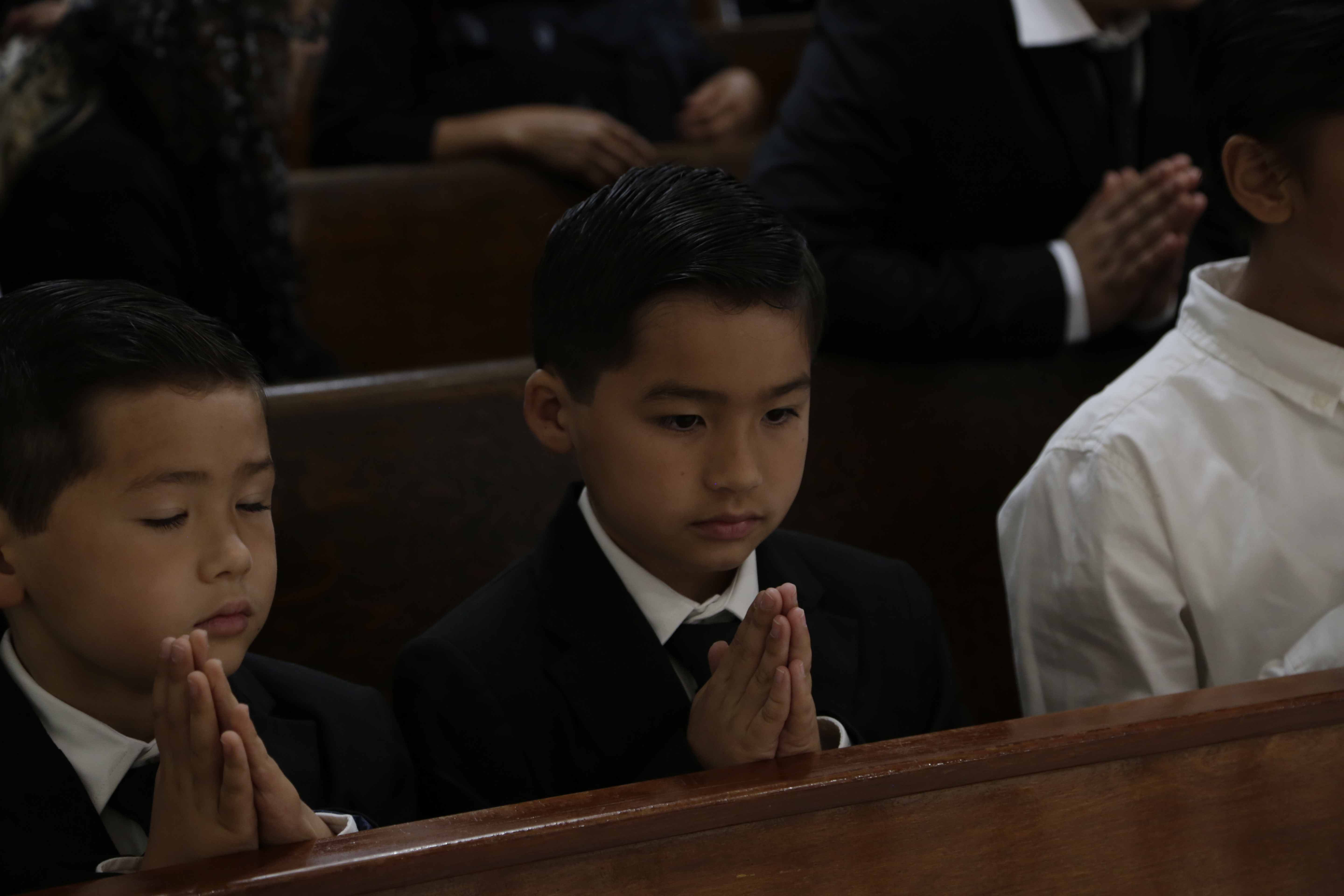
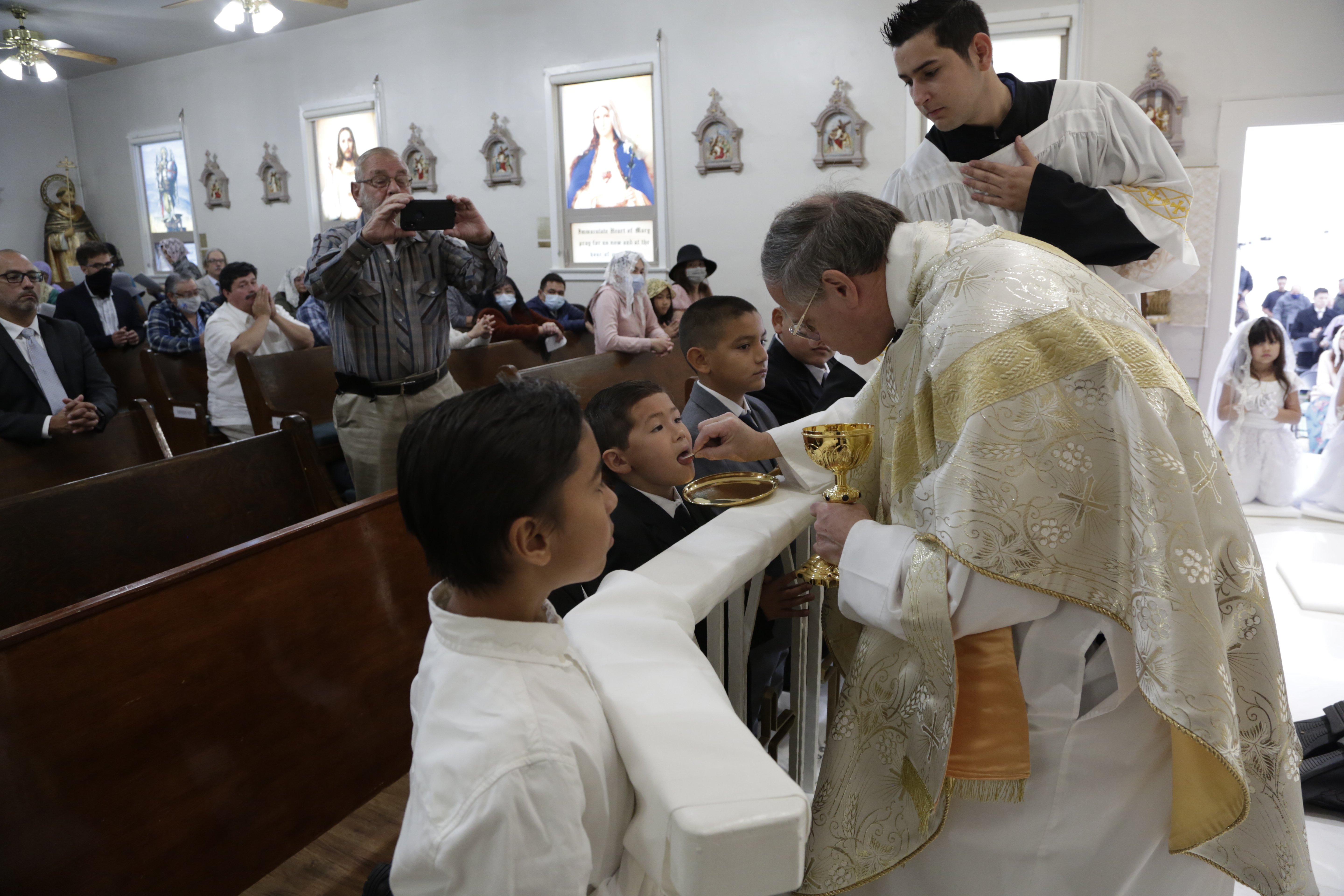
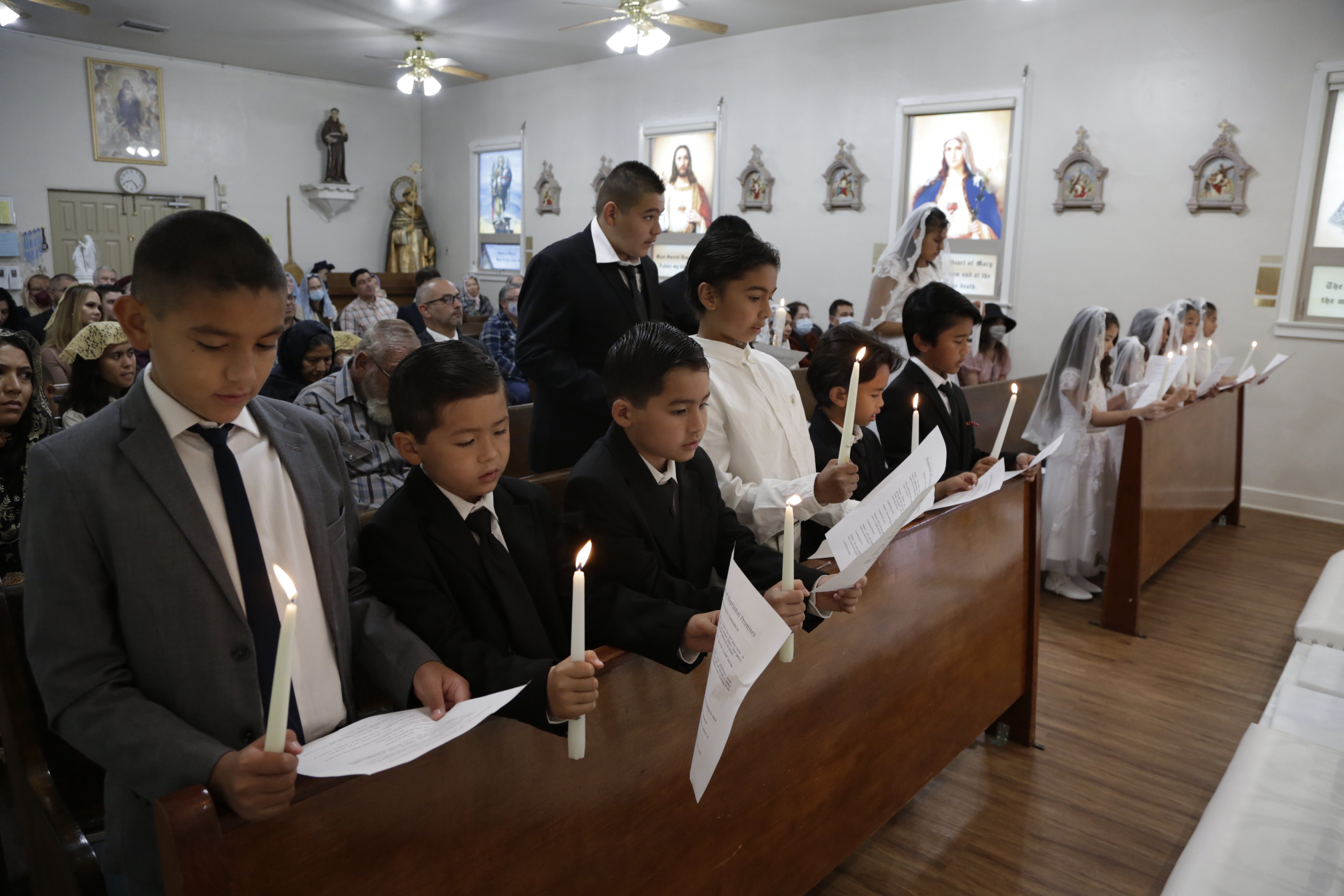
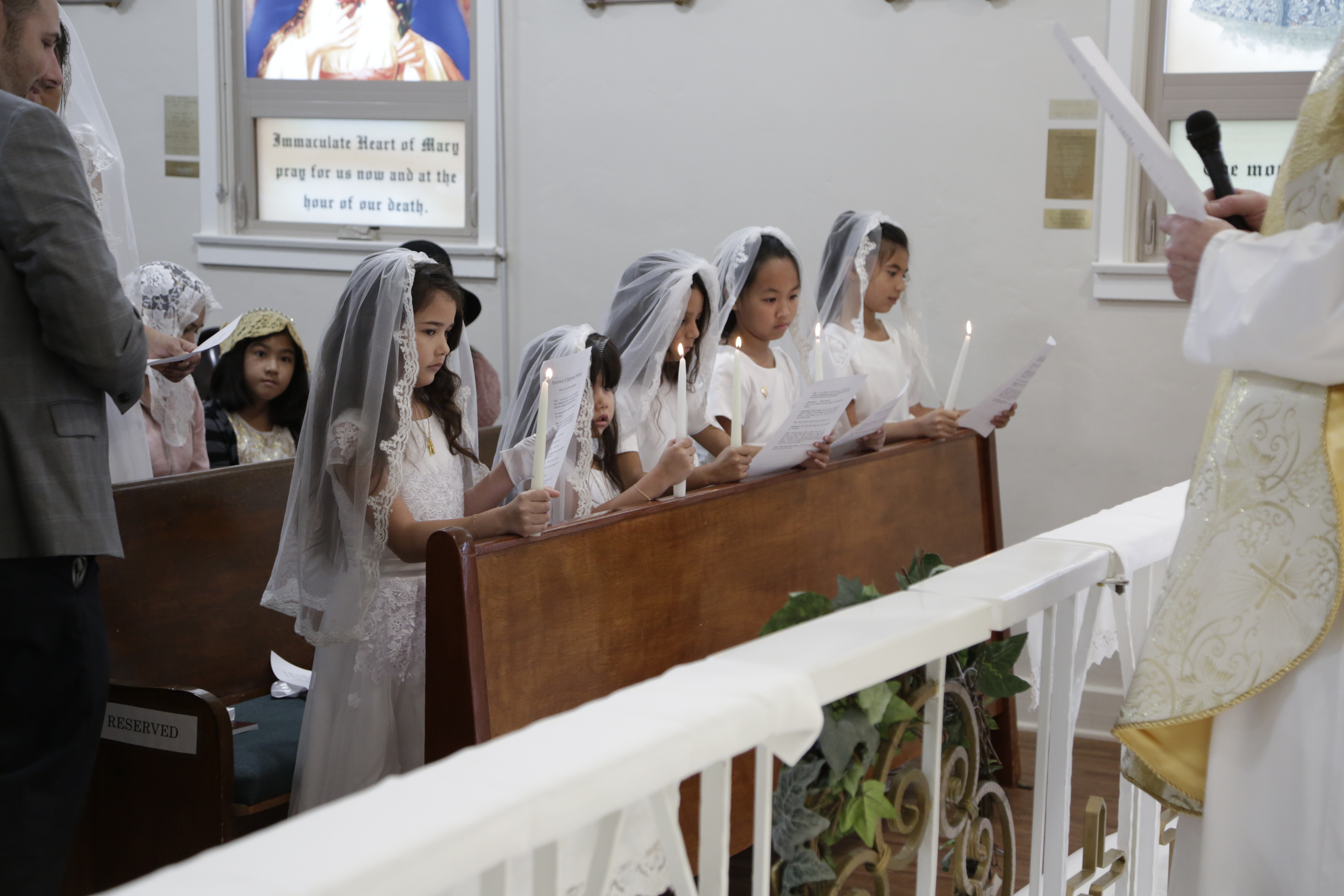
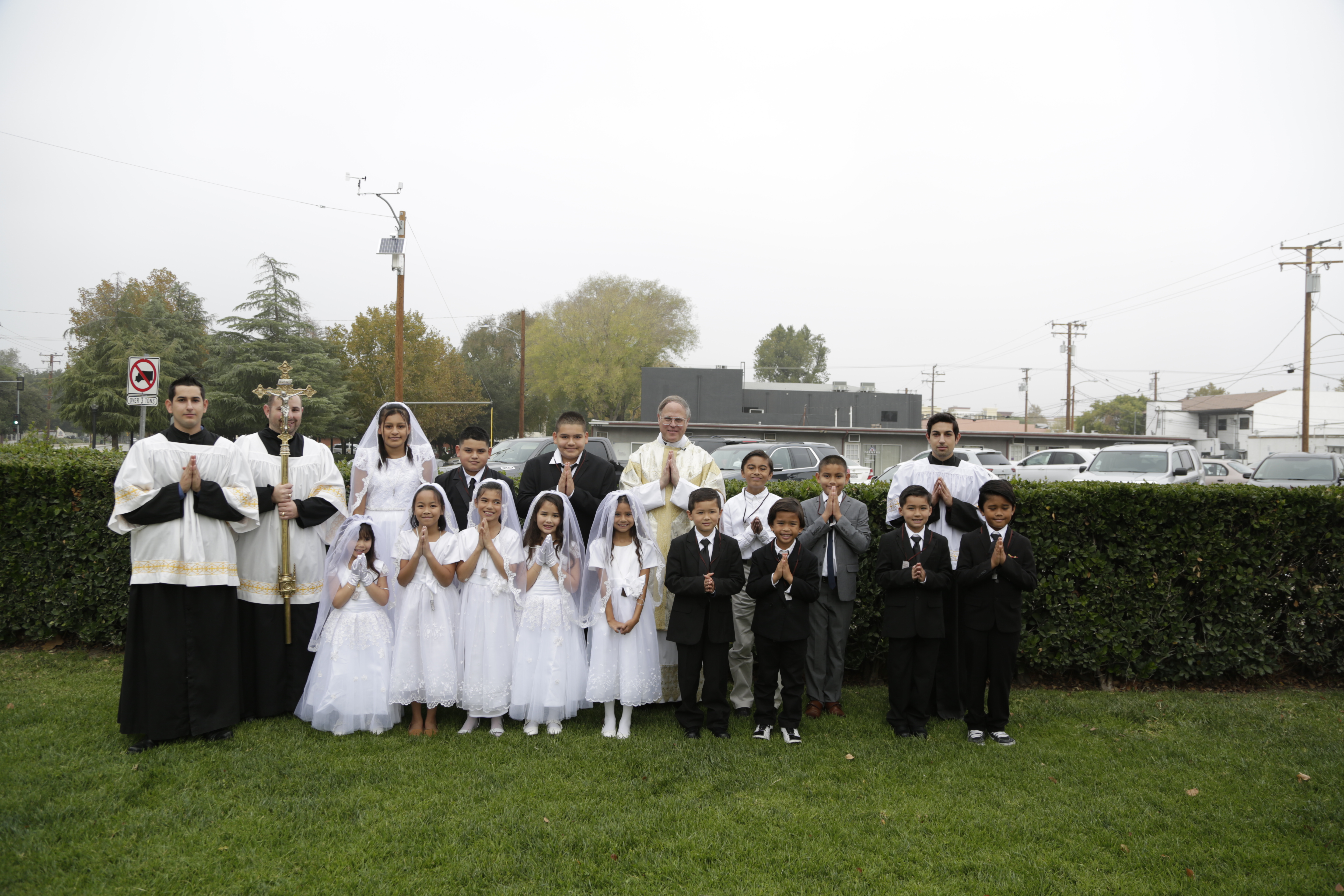
First Communion
    
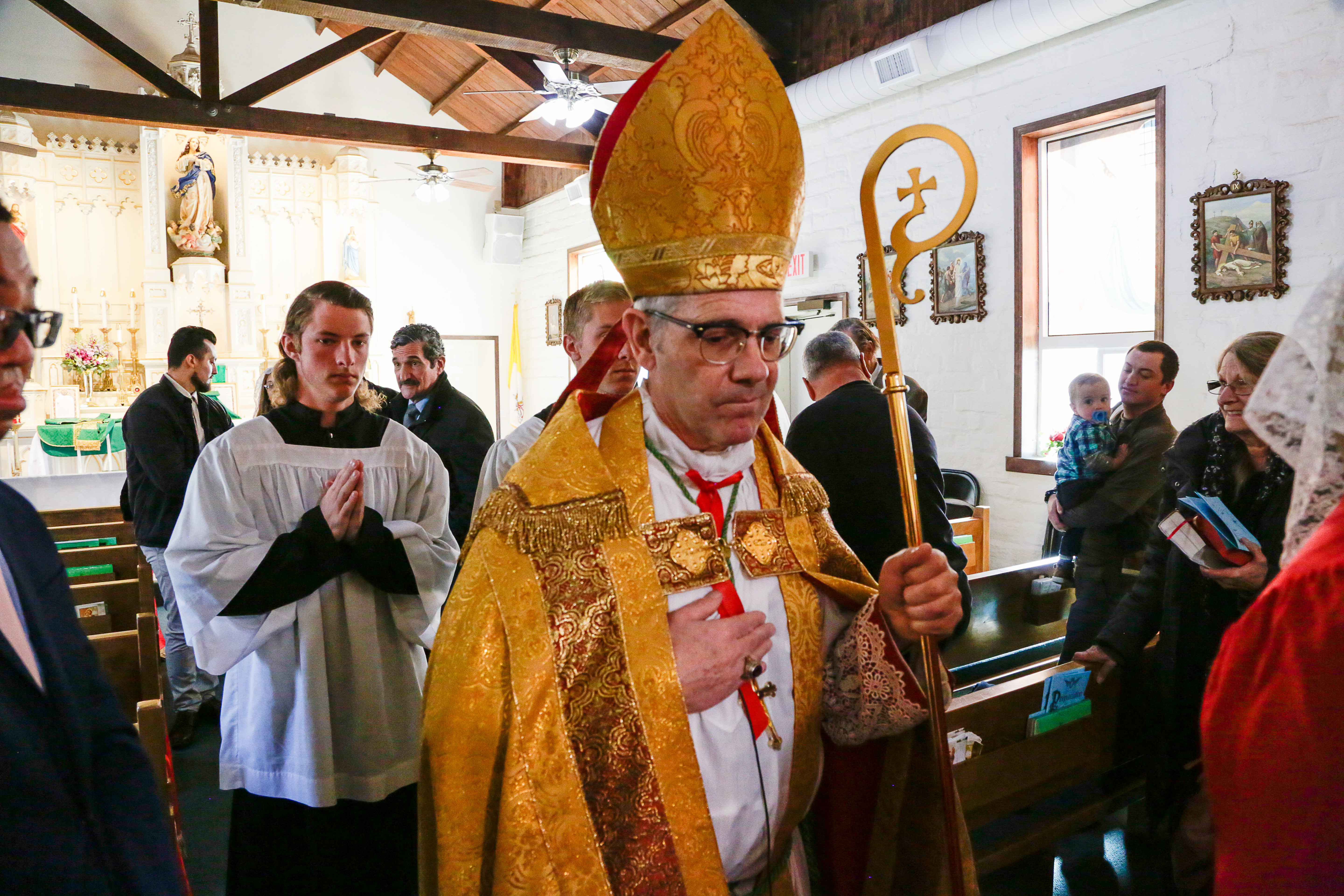
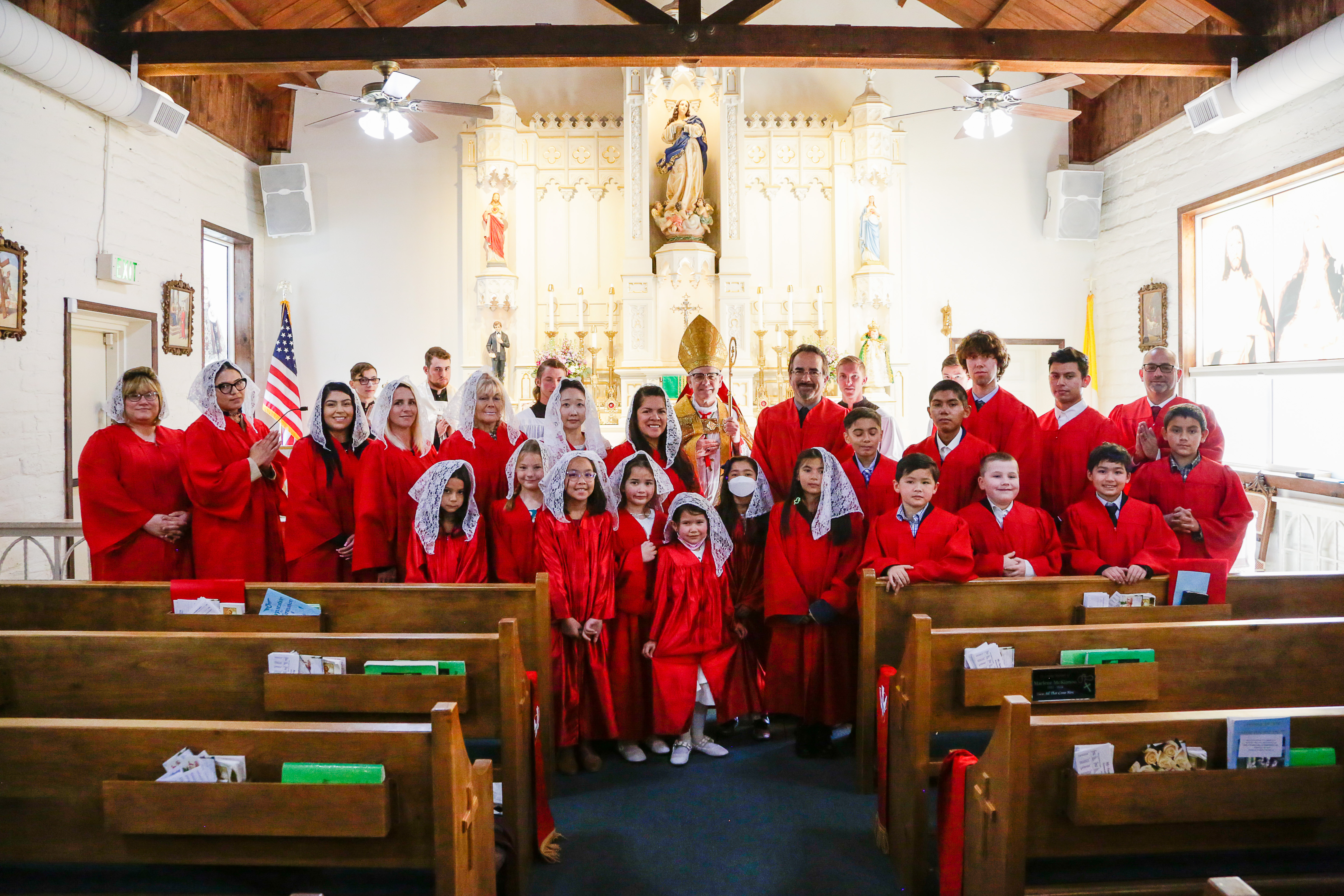
Confirmation
    
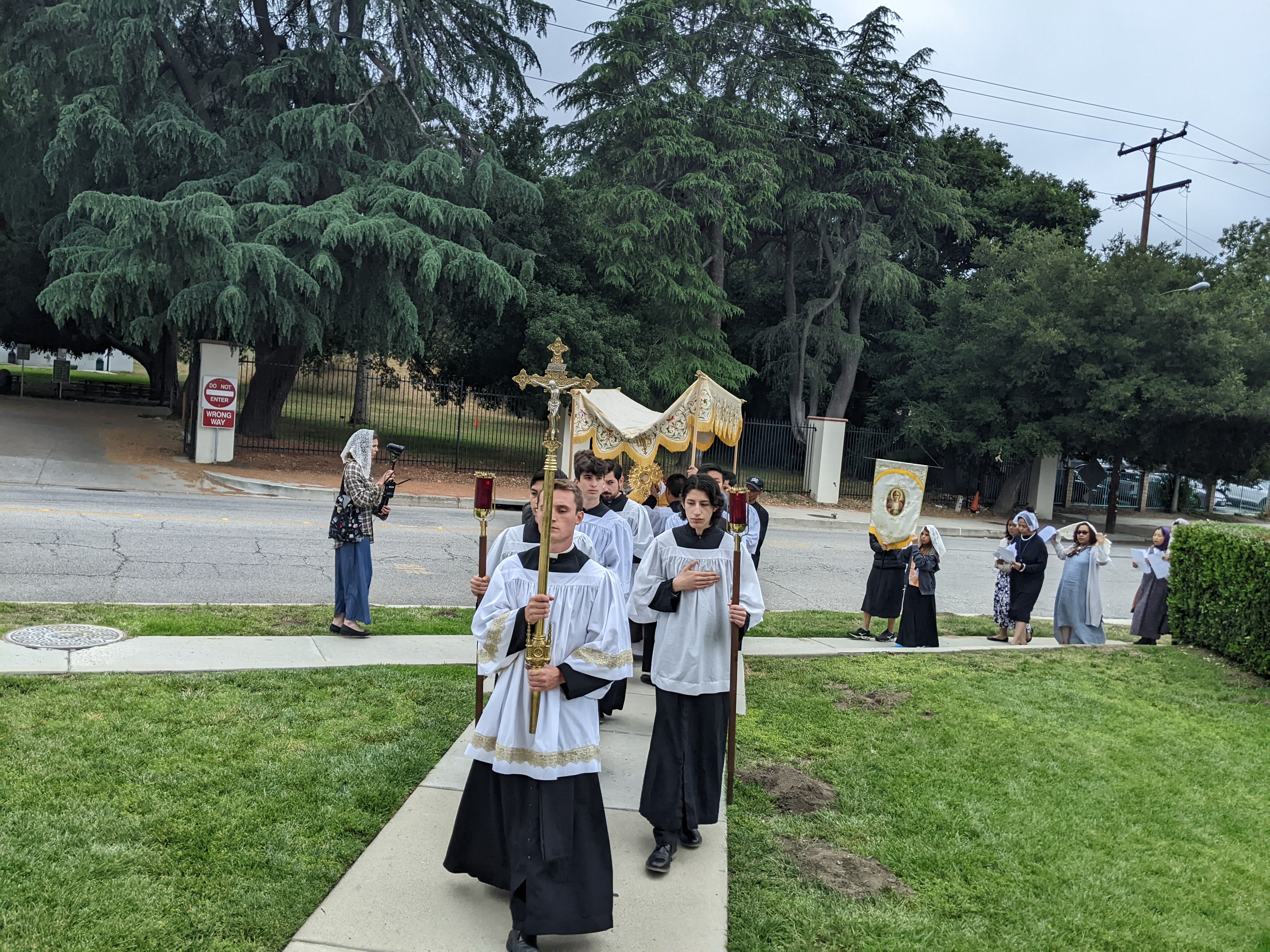
Corpus Christi
  


Summer Camp
  
|
|
|